

The Military Origins of Patches: The Evolution of Symbols Throughout History

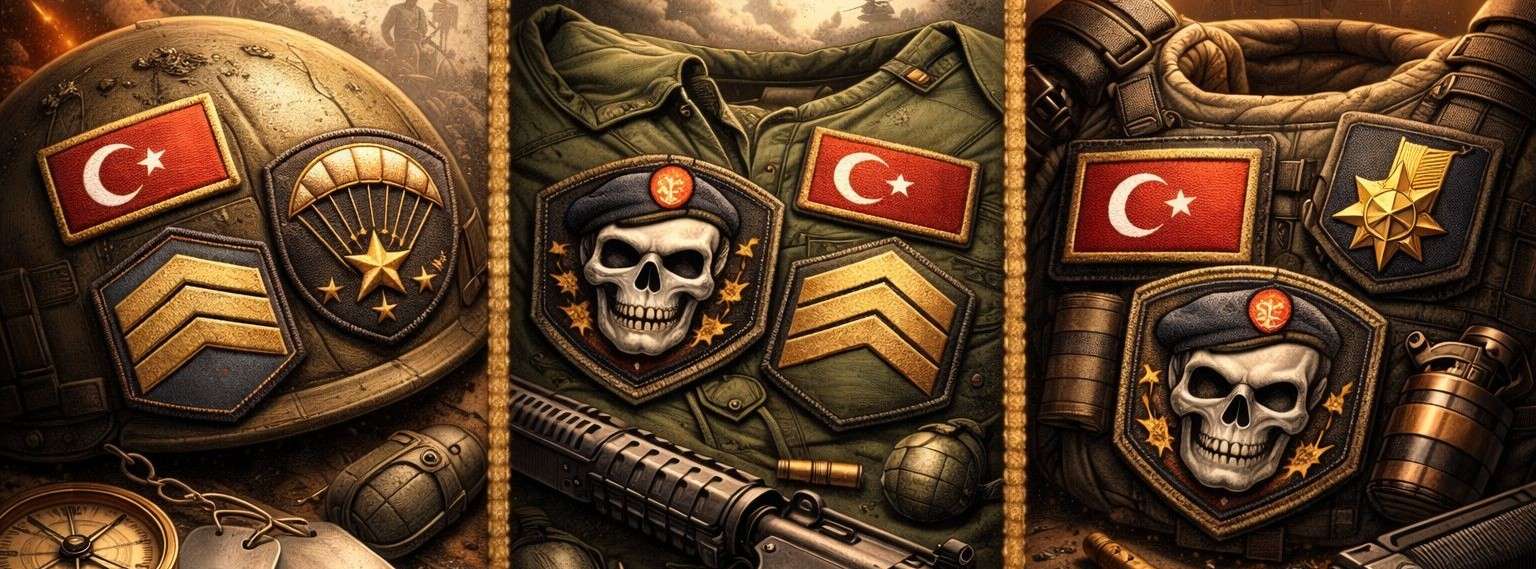
Patches—badges/insignia used on hats, jackets, bags, and tactical gear—may look like simple accessories today, but their roots go somewhere far older and more serious: identity, belonging, rank, honor, and sometimes survival in the field. In this article, I walk through the evolution from ancient symbols to modern military patches, highlighting the key turning points along the way.
The history of military patches is essentially the history of visual answers to the question “Who are we?” on the battlefield. Separating friend from foe, signaling rank, carrying unit pride, boosting morale… across centuries, different materials and symbols served the same core purpose. Many of the patch designs we see in collections and everyday wear today are built on that long, layered heritage.
Ancient Origins: The Birth of Symbols
The story of military patches begins with the earliest wars in human history. In antiquity, armies used symbols to define identity and unit affiliation. In the Roman Empire, for example, legionaries carried markers such as the aquila (eagle), often made of metal or leather. They weren’t “patches” in the modern sense, but they were among the first systematic insignia representing unit belonging and rank.
Similar practices existed in Ancient Greek and Persian forces. Spartan warriors famously marked their shields with the lambda (Λ), the symbol of Lakedaimon (Sparta). Over time, these battlefield identifiers evolved into more visible and portable forms—eventually moving toward textile-based insignia.
- Ancient symbols were functional: identification and morale.
- Markers gradually shifted from metal/leather toward textile applications.
The Middle Ages and the Renaissance: The Rise of Heraldry
In the Middle Ages, heraldry became the “institutional backbone” of patch culture. In feudal Europe, lords and knights displayed coats of arms on banners and cloth badges to show allegiance in wars and tournaments. Lions symbolized courage, eagles symbolized power; colors and geometric shapes quickly answered the question “Which side are you on?”
As armies grew more organized during the Renaissance, heraldic elements became more integrated into uniforms. Badge-like applications worn on the shoulder and chest can be seen as early predecessors of modern unit insignia.
The 19th Century: The Birth of Modern Military Patches
The 19th century is when patches and unit identifiers became more standardized on uniforms. During the American Civil War (1861–1865), units used colored cloth pieces and distinctive markers to avoid confusion. This highlights the patch’s practical advantage: fast identification in the field.
In Europe, rank and unit marking systems also became more structured through the Napoleonic era. Materials and craftsmanship diversified, and symbols stopped being “just identifiers”— they became a language of pride, legacy, and motivation. This is where the early seeds of what we now call “morale patches” began to take shape.
World War I: Official Standardization
World War I (1914–1918) is when the modern patch form truly emerged. Shoulder sleeve insignia became official and widely adopted; hundreds of designs appeared using animals, geographic references, unit numbers, and symbolic motifs. At this stage, patches weren’t just identifying units—they were telling stories.
Note: This period of standardization turned patches from “personal accessories” into formal elements of institutional identity.
- By the end of WWI, many official unit insignia had been standardized.
- Advances in embroidered increased both detail and durability.
World War II: Global Expansion and Symbolic Depth
World War II (1939–1945) is often called the golden age of patches. Unit insignia spread widely and gained new layers of meaning: heritage, mission, region, and even psychological warfare. The concept of the “combat patch” strengthened, turning wartime service into a visible marker of experience and honor.
At the same time, morale-driven designs surged—humor, unit camaraderie, and the message “we’re here.” Patches settled into a fascinating space between official symbolism and personal expression.
The Cold War and Vietnam: Secrecy and Personalization
During the Cold War, patches adapted to the need for concealment as much as visibility. Subdued, camouflage-friendly color palettes became common. In Korea and Vietnam, the combat patch culture expanded while special units strengthened their own symbolic languages.
In Vietnam, morale patches exploded in popularity. Soldiers created ironic, humorous, and deeply personal designs. With the rise of Velcro (hook-and-loop), fast swapping and rapid customization became part of the culture.
The Modern Era: Technology and Global Influence
Today, patches are produced with both traditional embroidered and modern materials. As durability and field performance needs increase, TPU and PVC Patch Models offer practical advantages—while the “warm, classic” texture of embroidered remains a strong favorite for everyday wear.
Symbols now reflect broader cultural variety: flags, unit iconography, operation patches, and pop-culture references. That’s why Country Flags Patch designs appeal to both collectors and people who want a clear identity statement.
Aviation-themed insignia carry their own tradition—squadron heritage and “flight culture” often show up directly in the symbolism. For those drawn to that style, Air Force Patch themes remain a strong, continuous line into the present day.
Everyday use (city & style)
If you want to avoid an overly “technical” look in daily outfits, classic embroidered often blends more naturally with clothing. It makes the patch feel like part of the garment, not an add-on.
Field & heavy outdoor use
If mud, rain, abrasion, and quick cleaning are constant realities, TPU/PVC surfaces can be more practical. In that scenario, function tends to outweigh pure aesthetics.
Collecting and displaying patches has also grown into its own culture. If you want to keep and showcase patches neatly, a Patch Wall can turn this heritage into a “living collection.” And if you’re focused specifically on military-themed choices, you can browse directly under Military Patch.
For embroidered classics with that timeless textile depth, you can also explore Embroidered Patch Models—often the most “wearable” option for day-to-day style.
Some people prefer patches that communicate essential info at a glance (especially in outdoor/tactical contexts). In that case, Blood Type Patch options are a functional choice that still fits the patch tradition.
And beyond military heritage, patches also evolved into brand identity and team culture—if that’s your lane, Corporate Logo Patch designs carry the same “belonging” logic in a modern form.
The Psychological and Cultural Impact of Symbols
The evolution of patches reveals how powerful symbols can be. Psychologically, they create a sense of belonging—many soldiers treat their patches like a “second skin.” Culturally, patches crossed into civilian fashion long ago; military aesthetics and insignia have been popular in streetwear for decades.
In the future, patches may become more digital—smart textiles, QR/NFC, and new layers of meaning. But the core rarely changes: courage, unity, and history.
Conclusion: A Living Heritage
The military origins of patches are the result of a multi-thousand-year evolution. From ancient symbols to modern morale patches, each stage tells a story about conflict, identity, and belonging. Today, that heritage lives on in collections, tactical gear, and everyday style.


